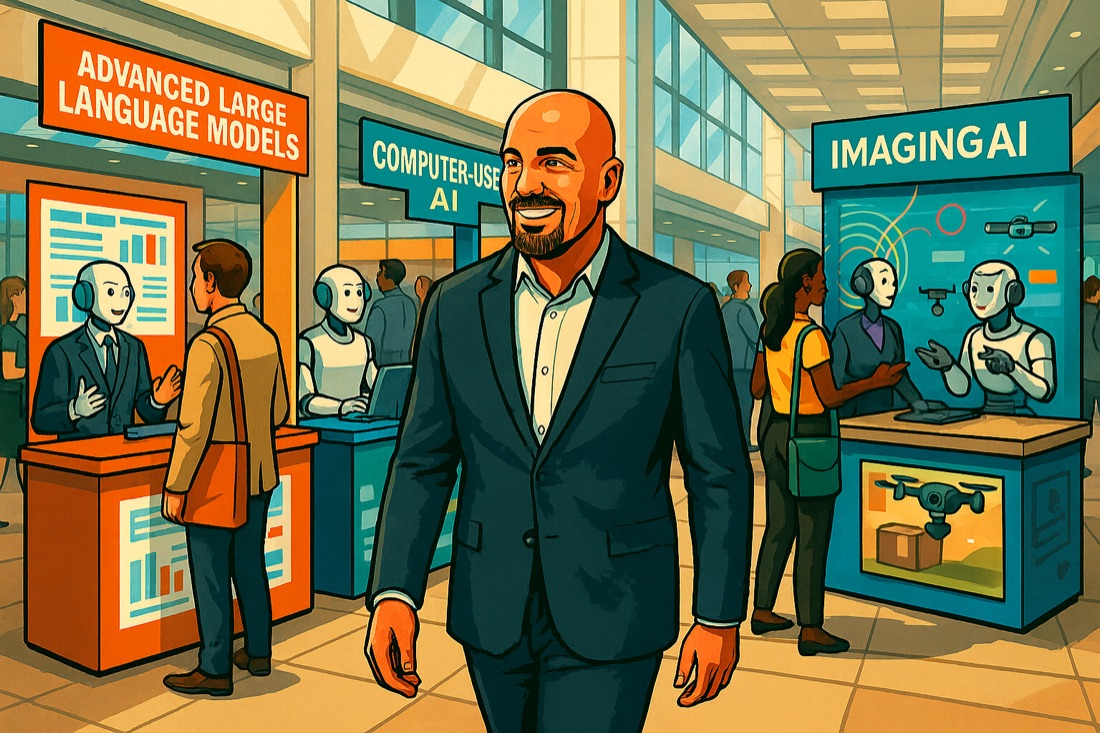
Exploring What’s Next in AI: Technologies Shaping the Future of Operations
As I discussed in my previous article, Moore’s Law, Meet AI: Why Waiting 6 Months Is a Mistake, AI is evolving faster than most of us can keep up with. I will be the first to admit that I do not consider myself an expert in every emerging tool or trend. What I do have is a deep curiosity about where these technologies are headed and how they might impact the way we run operations. From my vantage point as someone who has led digital transformation efforts, I know that the biggest breakthroughs often come from connecting the right tool to the right problem at the right time. While I am still building my own hands-on experience with some of these emerging capabilities, there are a few that stand out as especially exciting. They represent a mix of advancements that could fundamentally change the way operations teams work, ranging from how we process information to how we interact with systems and customers.
The Rise of More Capable LLMs
Large language models (LLMs) like ChatGPT, Claude, and Gemini have already reshaped the way many of us work, but we are only scratching the surface of their potential. Each new generation of these models is showing improved reasoning, contextual awareness, and accuracy, which means their usefulness in operational contexts will only improve.
For operations leaders, this matters because LLMs are moving beyond content generation. We are starting to see them handle more complex, multi-step reasoning tasks, analyze data with greater precision, and adapt to domain-specific knowledge. That means they are becoming less of a “clever assistant” and more of a capable problem-solver.
Where these models become even more powerful is when they are connected to an agentic workflow; a system that not only processes information but also takes action on it. When an advanced LLM can hand off its output to a workflow automation tool, it moves from simply making recommendations to actually executing them. Imagine feeding in a messy mix of operational data, customer feedback, and process documentation, and having the AI not only generate actionable recommendations but also update systems, trigger follow-up communications, or launch process changes automatically. For me, the most exciting part is not that these models can do more, it is that they are becoming easier for non-technical teams to use in meaningful ways. As they continue to improve, the barrier to entry for AIpowered decision support will keep getting lower, allowing even the smallest businesses compete against large corporations.
Computer-Use AI: Turning AI Into a True Digital Teammate
One of the most exciting developments on the horizon is computer-use AI; AI that can interact with software and systems the same way a human would. Instead of being limited to text prompts or API calls, these tools can navigate browsers, click buttons, log into portals, copy and paste information, and complete tasks across multiple platforms. For operations teams, the potential here is massive. Many of the processes we manage span multiple systems that do not always integrate cleanly. Think about onboarding a new vendor, processing a complex customer request, or updating records across several internal tools. A computer-use AI agent could follow the same steps a person would, but at machine speed, 24-hours a day, and with consistent accuracy. We are still in the early days of this capability, but it is easy to imagine the impact. Fewer repetitive handoffs, faster turnaround times, and more time for teams to focus on the parts of the work that require human judgment and collaboration. For me, that is the promise of computer-use AI — not replacing people, but giving them a truly capable digital teammate.
Voice-Based AI: Streamlining Communication and Access to Information Voice-based AI tools are making it possible to interact with systems and processes through natural conversation. Instead of navigating menus, typing commands, or searching through documentation, you can simply ask for what you need and get it instantly. This could mean a warehouse manager asking, “What’s our current backlog for orders in the Southeast region?” or a customer support lead saying, “Pull up the last five highpriority tickets for Client X,” and having the results appear instantly. Beyond internal use, voice AI is opening the door for smarter inbound and outbound calls. On inbound calls, it can answer routine questions, pull relevant account details, or triage requests before routing them to the right person. On outbound calls, it can follow up on service requests, conduct satisfaction surveys, or provide appointment reminders, all while logging the results directly into your CRM or ticketing system. These capabilities can lower the barrier to technology adoption and make work more efficient. Not every team member is equally comfortable with new software, but nearly everyone can speak naturally. By layering voice AI on top of existing systems, you give teams faster access to information, the ability to take action, and the tools to manage communications without learning another interface.
Imaging and Video-Based AI: Turning Visual Data Into Action
Advances in imaging and video-based AI are making it possible to analyze visual content with a level of speed and accuracy that was once seemingly impossible. These tools can detect patterns, identify anomalies, and generate insights from photos, live video feeds, or recorded footage, all without requiring manual review. And while most people think of imaging AI in the context of content creation for art or movies, the real opportunity for operations lies in how these capabilities can streamline inspections, verify compliance, and automate visual documentation. The applications go far beyond manufacturing or physical goods. Video AI could help document processes for training, create step-by-step visual guides, or even monitor compliance in service environments. Imaging AI could be used to scan documents for key information, verify product labeling, or ensure assets meet brand or regulatory standards. The ability to turn visual data into searchable, structured information can make audits and reporting far more efficient. Like other emerging AI technologies, the impact multiplies when imaging and video tools are integrated with existing systems. A quality control AI could feed directly into a ticketing platform to trigger corrective action. A training video analysis tool could highlight areas where employees struggle and flag them for follow-up. When combined with other automation and decision-making systems, these tools do more than capture what is happening; they help teams act on it in real time.
Preparing for What’s Next
Large language models, computer-use AI, voice-based AI, and imaging and video-based AI each hold incredible potential for transforming operations. Some are already mature enough for pilot projects, while others are still emerging. But the pattern is clear: these capabilities are advancing quickly, and the teams that are ready to experiment, learn, and adapt will be the ones to gain the most. As an operations leader, I see my role not just as evaluating the tools themselves but as preparing the organization to adopt them effectively when the time is right. That means building a culture that embraces curiosity, lowers the risk of early experimentation, and celebrates measurable wins. With that foundation in place, new technology becomes less of a disruption and more of an opportunity. If your organization is exploring these technologies or preparing for a broader digital transformation, I am always open to sharing insights and lessons learned from the field. Let’s connect and explore how to turn emerging opportunities into measurable results.
Originally on LinkedIn ·
© 2025 Wade Hudson. All rights reserved. Share the link or quote a short excerpt with credit, but please don’t republish this article without permission.