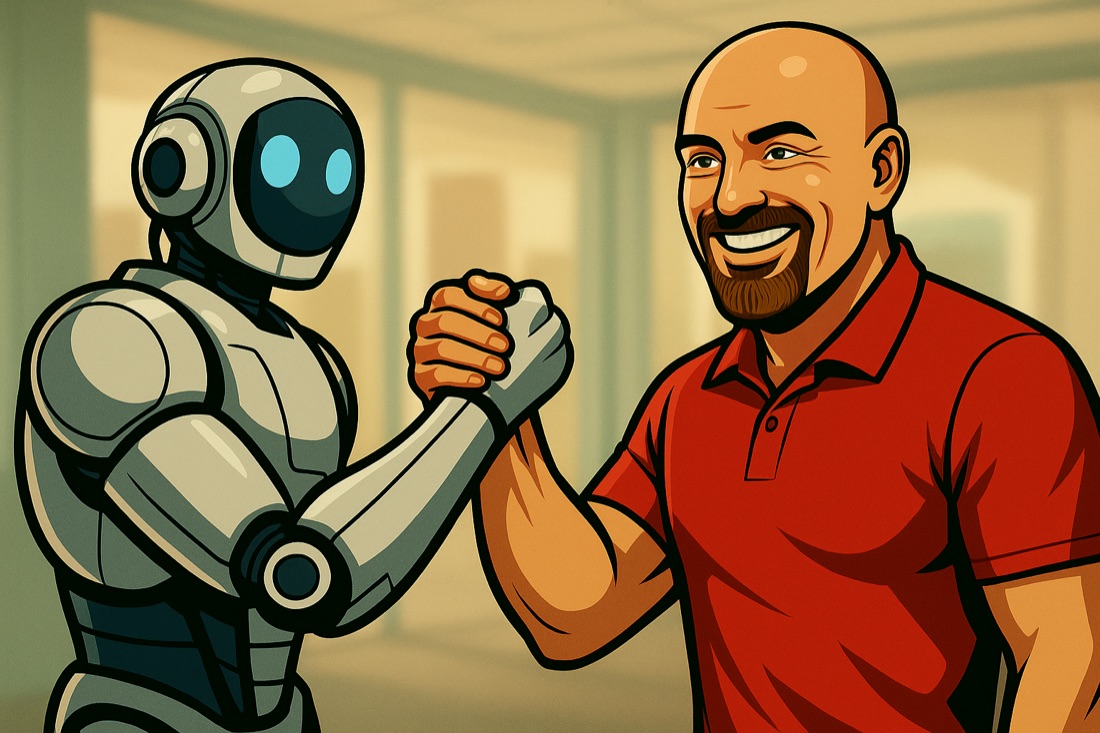
Why People Still Matter: Leveraging Human Strengths in an AI-Powered Organization
AI is everywhere, and it is quickly becoming a fundamental part of how businesses operate. It can analyze data at scale, automate repetitive tasks, and accelerate decision-making in ways we could not have imagined just a few years ago. For operations leaders, this opens the door to unprecedented efficiency and scale, which is exciting. But after leading multiple large-scale transformations, I have seen firsthand that technology alone is never enough. The success or failure of any new system, tool, or workflow almost always comes down to people and their ability to adapt, trust the process, and see the value in the change. AI can be a powerful force multiplier, but it still relies on human strengths to maximize its impact. This article explores four of those strengths: decision-making in context, emotional intelligence, adaptability, and vision, and why they matter more than ever in an AI-powered organization.
Decision-Making in Context
AI is powerful at processing information and presenting options, but it lacks the broader context that leaders bring to the table. It does not understand the history behind a client relationship, the cultural nuances of a team, or the long-term strategic trade-offs that might influence a decision. It can tell you what is most efficient, but it cannot determine what is most important for the organization’s future.
In one transformation I led, the data pointed clearly toward a more costeffective vendor arrangement. On paper, it was the right move. But a deeper look revealed that one of our existing partners had consistently supported us through periods of high demand and operational complexity, while also being a valued customer. This was something the data alone could not fully capture. We ultimately chose a blended approach that preserved the relationship while still achieving cost savings. It was not the purely data-driven choice, but it was the right one for the business. That is where human judgment shines and why it remains essential. AI can inform the decision, but humans decide in a way that accounts for values, relationships, and priorities that extend beyond the numbers.
Emotional Intelligence and Trust
Change adoption is not purely a logical process. Even when the benefits are clear, people’s willingness to embrace a new tool or workflow often depends on how they feel about the change and the people leading it. AI cannot build trust, inspire confidence, or understand the emotional dynamics within a team... but leaders can. When I have led high-stakes transformations, I have made it a priority to be visible and accessible throughout the process. That has meant listening to concerns without judgment, acknowledging uncertainty, and taking the time to explain not only what was changing but why it mattered. These moments are just as important as the technical rollout because they create space for open dialogue and reduce resistance. That level of transparency is essential for long-term adoption and success. Trust is built over time, but it can be accelerated when leaders show empathy, consistency, and a willingness to share in both the risks and rewards of the change. AI can help deliver the message, but it is the human connection that determines whether the message is believed and acted on.
Adaptability and Problem-Solving
AI operates within the parameters it is given. It can adapt and make decisions within those boundaries, but when conditions change in unexpected ways, it cannot, at least for now, step back, rethink the rules, and design a new approach. This is where humans can and should step in. Adaptability is one of the most valuable skills in any transformation, especially when the pace of change is fast and uncertainty is high. During a major product and vendor migration I led, we made a critical discovery that affected both our proposed product offerings and the vendors who would support fulfillment. The plan we had spent months preparing was suddenly no longer viable. Instead of halting the project entirely, we restructured our offerings, updated the rollout schedule, shifted certain workflows to specific vendors, and prioritized highimpact tasks that would keep the business moving. This pivot kept the transformation on track while minimizing disruption to customers and daily operations. AI can be a powerful partner in identifying problems, suggesting possible solutions, and even updating project plans. However, the decision to change course and the creativity required to design a new path remain distinctly human strengths. Adaptability ensures that transformation efforts remain resilient, no matter how many unexpected challenges arise.
Vision and Strategy
AI can optimize for what exists today, but it can't define where an organization should go tomorrow. It can process large amounts of data, identify trends, and even model different scenarios. However, deciding which path aligns with the company’s mission, values, and long-term goals is still a human responsibility. When I've led transformation initiatives, the technology itself was never the vision; it was the enabler. Whether the goal was to expand into new markets, improve customer experience, or streamline operations, the strategy always began with a clear picture of the outcome we wanted to achieve. From there, the appropriate technology was selected and implemented in ways that supported that vision, not the other way around. Without human vision, even the most advanced AI risks being used for incremental improvements instead of transformational change. Leaders connect technology’s capabilities to the bigger picture, ensuring that investments drive long-term success rather than short-term gains. This ability to chart the course and inspire others to follow it is what keeps transformation efforts focused, aligned, and sustainable.
Bringing It All Together
AI will continue to evolve and transform the way we work, but its true potential is only realized when paired with human strengths. Decisionmaking in context ensures choices reflect more than just efficiency metrics. Emotional intelligence and trust create the buy-in needed for successful adoption. Adaptability keeps transformation efforts resilient when the unexpected happens. Vision and strategy connect technology’s capabilities to long-term business goals. The organizations that thrive in an AI-powered world will not be the ones with the most tools, but the ones that combine those tools with human judgment, empathy, adaptability, and foresight. Technology can enhance performance, but people still define the direction and set the standard for success. If your organization is exploring AI or preparing for a broader digital transformation, I am always open to sharing insights and lessons learned from the field. Let’s connect and explore how to combine technology and human strengths to achieve sustainable results.
Originally on LinkedIn ·
© 2025 Wade Hudson. All rights reserved. Share the link or quote a short excerpt with credit, but please don’t republish this article without permission.